
Structural Pruning That Reduces Storm Damage
Tree Trimming in Jamestown for mature landscape trees requiring health maintenance and wind load reduction
Spring and summer severe weather in the Piedmont region subjects mature trees to high winds that exploit structural weaknesses created by dense canopy growth, crossing limbs, and branch angles that collect ice during winter storms. Crown thinning and selective limb removal reduce wind resistance, eliminate deadwood that breaks loose during weather events, and improve tree structure so energy goes into trunk and root development rather than supporting excessive foliage weight. Bowie's Outdoor Services provides tree trimming across Jamestown and High Point, with pruning techniques matched to tree species, property layout, and the storm exposure that affects how trees perform during severe weather months.
Structural pruning focuses on removing limbs that create imbalanced canopy weight, eliminating branches that grow toward structures or power lines, and thinning interior growth that traps moisture and reduces air circulation through the canopy. Precision work matters on residential properties where specimen trees contribute to landscape value and where poor pruning technique creates visual damage that takes years to correct through natural regrowth.
Schedule a trimming consultation to review tree health, discuss pruning objectives, and identify limbs that contribute to storm vulnerability or structural imbalance.
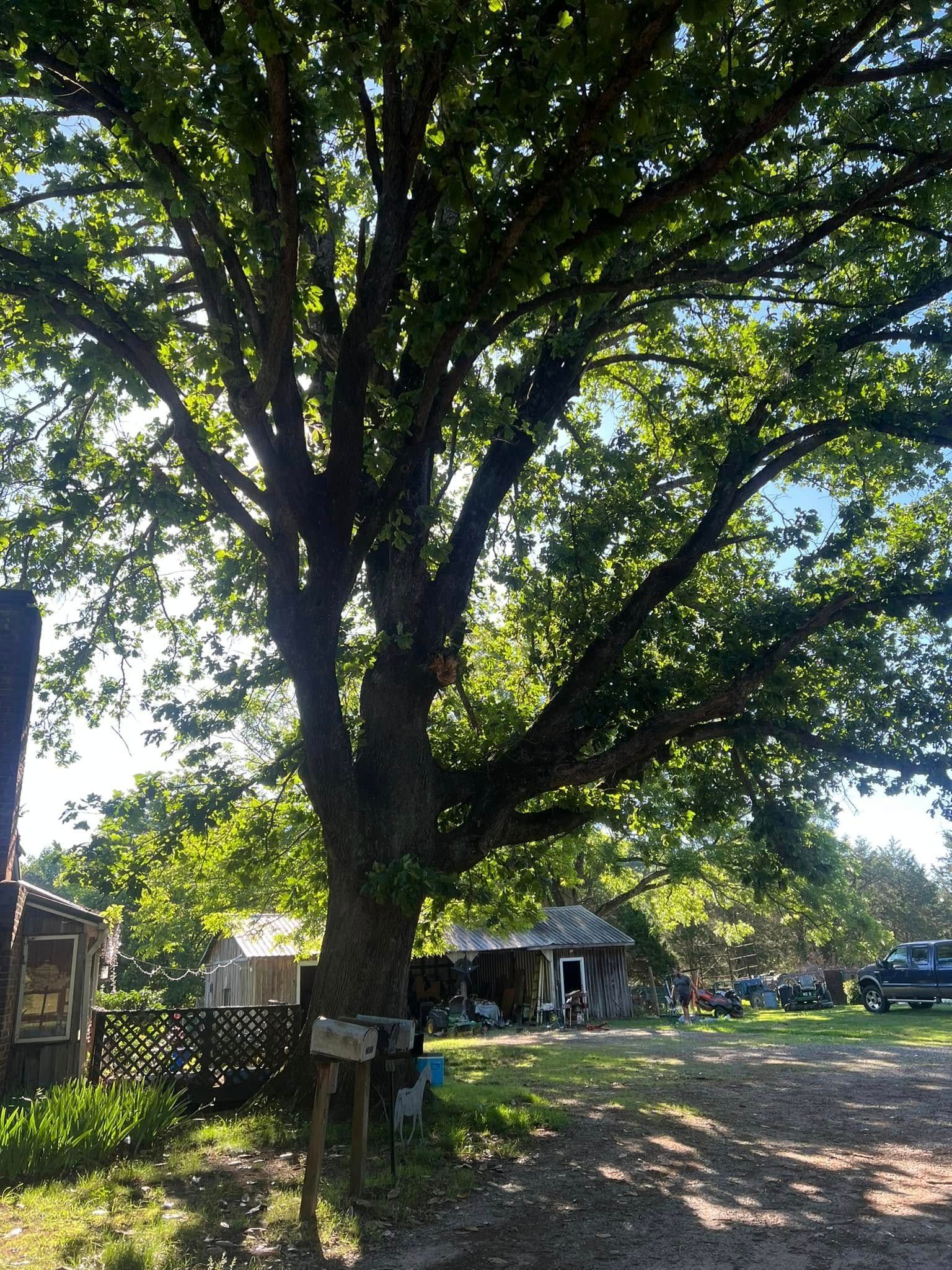
Before
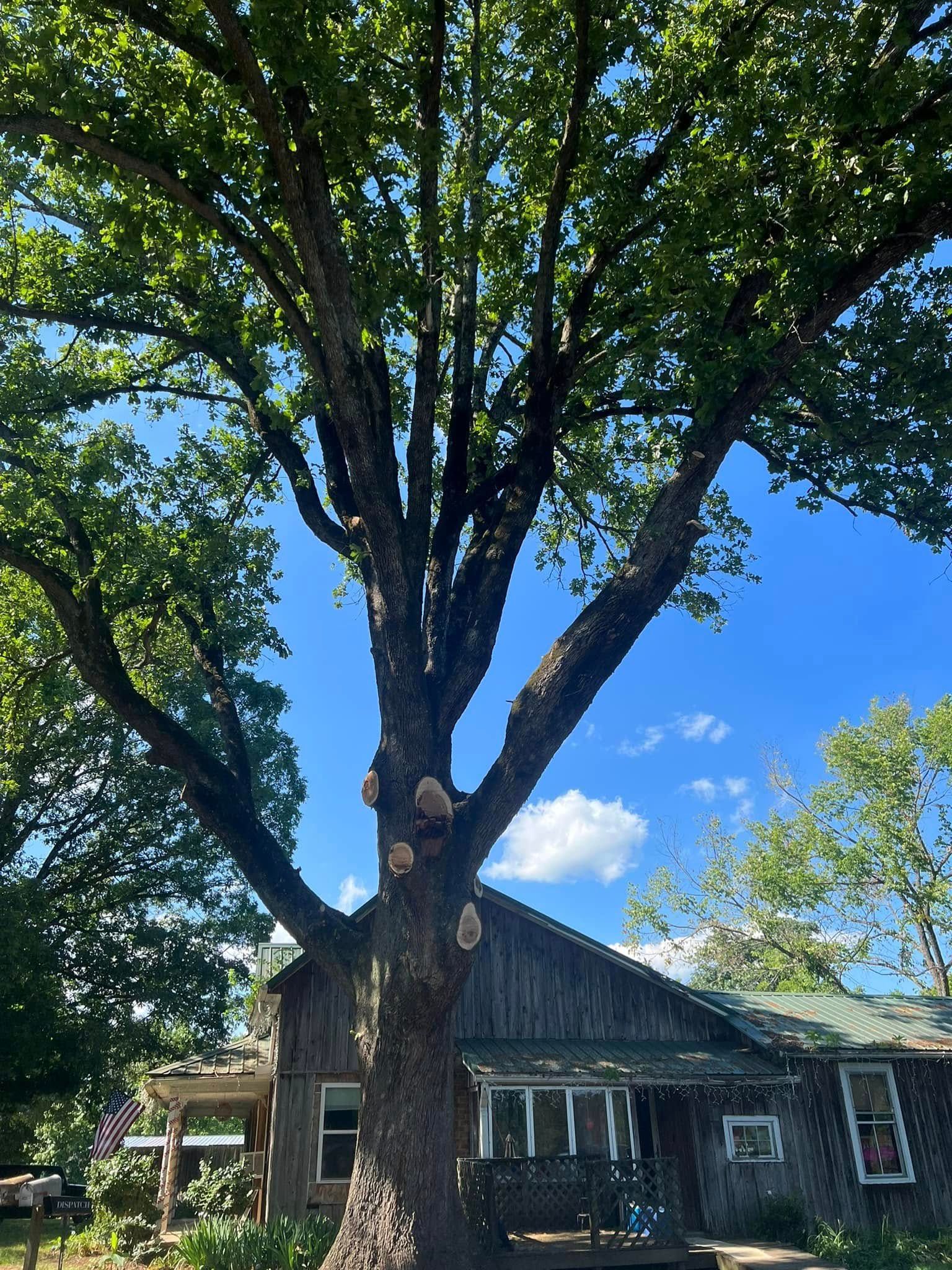
After
Why Selective Pruning Works for Long-Term Tree Health
Crown thinning removes a percentage of interior growth without altering overall canopy shape, which allows wind to pass through rather than pushing against solid foliage mass that acts like a sail during high-wind events. Selective limb removal targets deadwood, crossing branches that create friction wounds, and growth with narrow attachment angles prone to failure under ice or wind load, while preserving the limbs that define tree form and provide shade coverage.
After trimming work finishes, you notice increased light penetration to understory plantings and turf areas that previously struggled in deep shade, reduced leaf and twig accumulation in gutters and on hardscape surfaces, and improved tree symmetry that balances canopy weight across the trunk. Storm events produce less breakage because wind load has been reduced and weak limbs have been removed before weather forces them down onto roofs or vehicles.
Winter pruning during dormancy minimizes sap loss and stress on trees, while summer crown work addresses rapid growth that occurs during warm months with adequate rainfall. Trimming maintains year-round work availability and provides scheduled maintenance that reduces emergency callouts from storm-damaged limbs.
What Homeowners Ask About Tree Trimming
Questions about trimming usually focus on timing, technique, and what changes property owners should expect after pruning work concludes.
What is crown thinning and why does it help trees?
Crown thinning selectively removes interior branches to reduce overall foliage density without changing canopy shape, which decreases wind resistance and allows better air circulation that reduces moisture-related disease while maintaining the tree's natural form.
How does tree trimming reduce storm damage in Jamestown?
Removing deadwood, thinning dense canopy growth, and eliminating limbs with weak attachment angles reduces the weight and wind load that cause breakage during high winds common in spring and summer severe weather events across the Piedmont Triad.
When should trees be trimmed to avoid stress or damage?
Winter pruning during dormancy creates minimal stress because sap flow is reduced, while summer trimming controls rapid growth and maintains clearance from structures, though both seasons support healthy regrowth when proper technique is used.
What's the difference between trimming and topping?
Trimming uses selective cuts that preserve tree structure and health, while topping removes large portions of the canopy indiscriminately and creates stress, decay entry points, and weak regrowth that increases long-term storm vulnerability.
How often should mature landscape trees be trimmed?
Most mature trees benefit from structural evaluation every three to five years, with pruning intervals depending on growth rate, storm exposure, proximity to structures, and whether previous weather events created new deadwood or damage.
Bowie's Outdoor Services handles tree trimming for residential and commercial properties throughout Jamestown and High Point, with pruning schedules designed around tree health and storm season preparation. Request an evaluation to identify trimming needs and review how selective pruning improves both appearance and structural resilience.