
Stone Features Built for Longevity
Decorative Rock Installation in Jamestown for landscape definition and low-maintenance ground cover
Decorative rock and stone features provide permanent landscape definition that doesn't decompose, shift color, or require annual replacement like organic mulches. Bowie's Outdoor Services installs decorative rock for residential and commercial properties across Jamestown and the Piedmont Triad, integrating stone with plant beds, hardscape elements, and drainage features. Clay soil in this region benefits from rock installation that allows water infiltration while preventing erosion, and residential landscaping increasingly uses stone to reduce maintenance demands without sacrificing visual detail.
Installation begins with site preparation that addresses drainage direction, compaction issues, and edging requirements to keep rock confined to intended areas. Rock selection depends on color preference, size gradation, and whether the material will surround plantings, define pathways, or serve as standalone features integrated with existing trees and hardscape.
Request a detailed estimate based on your site's drainage characteristics and design objectives.
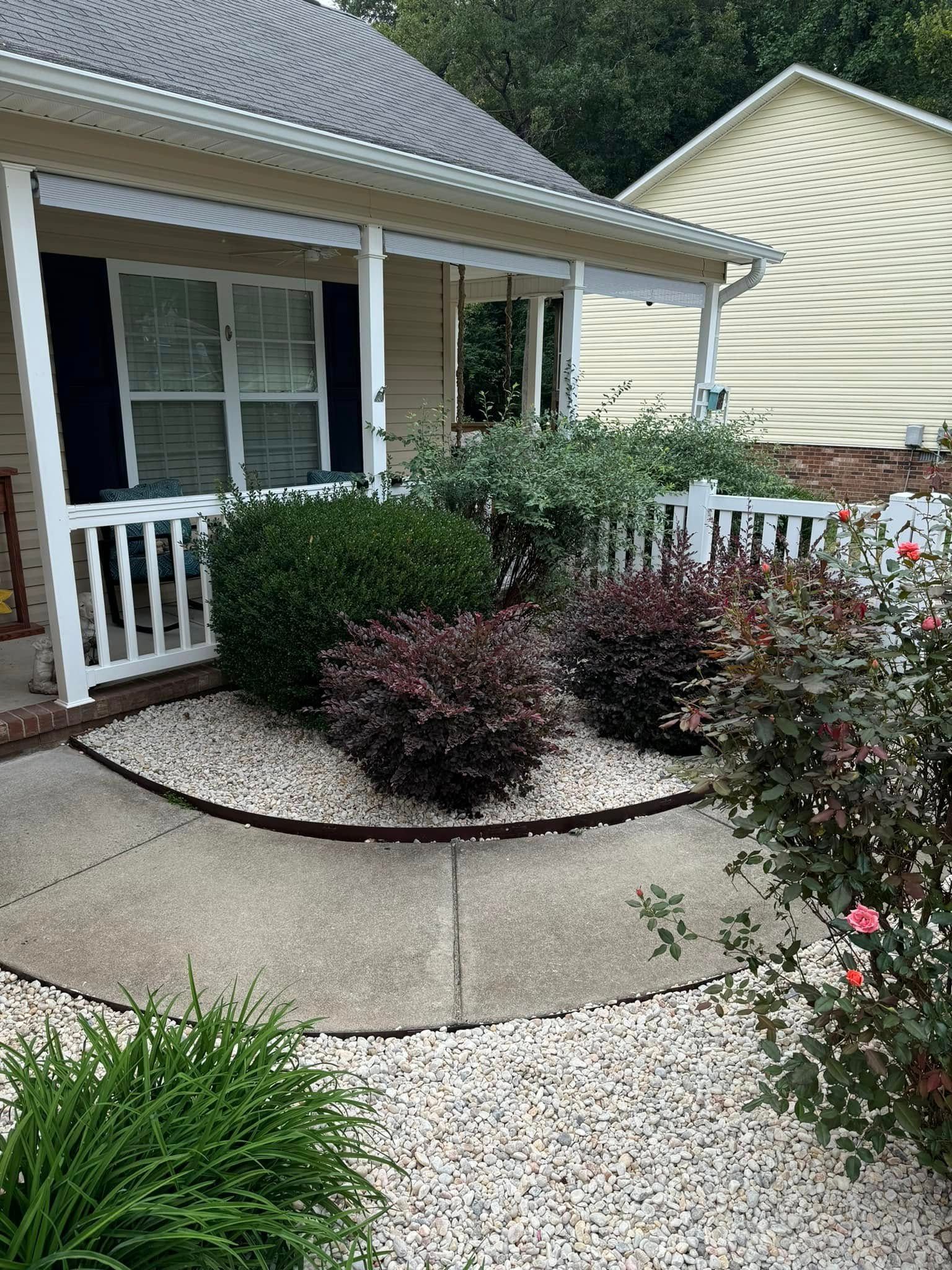
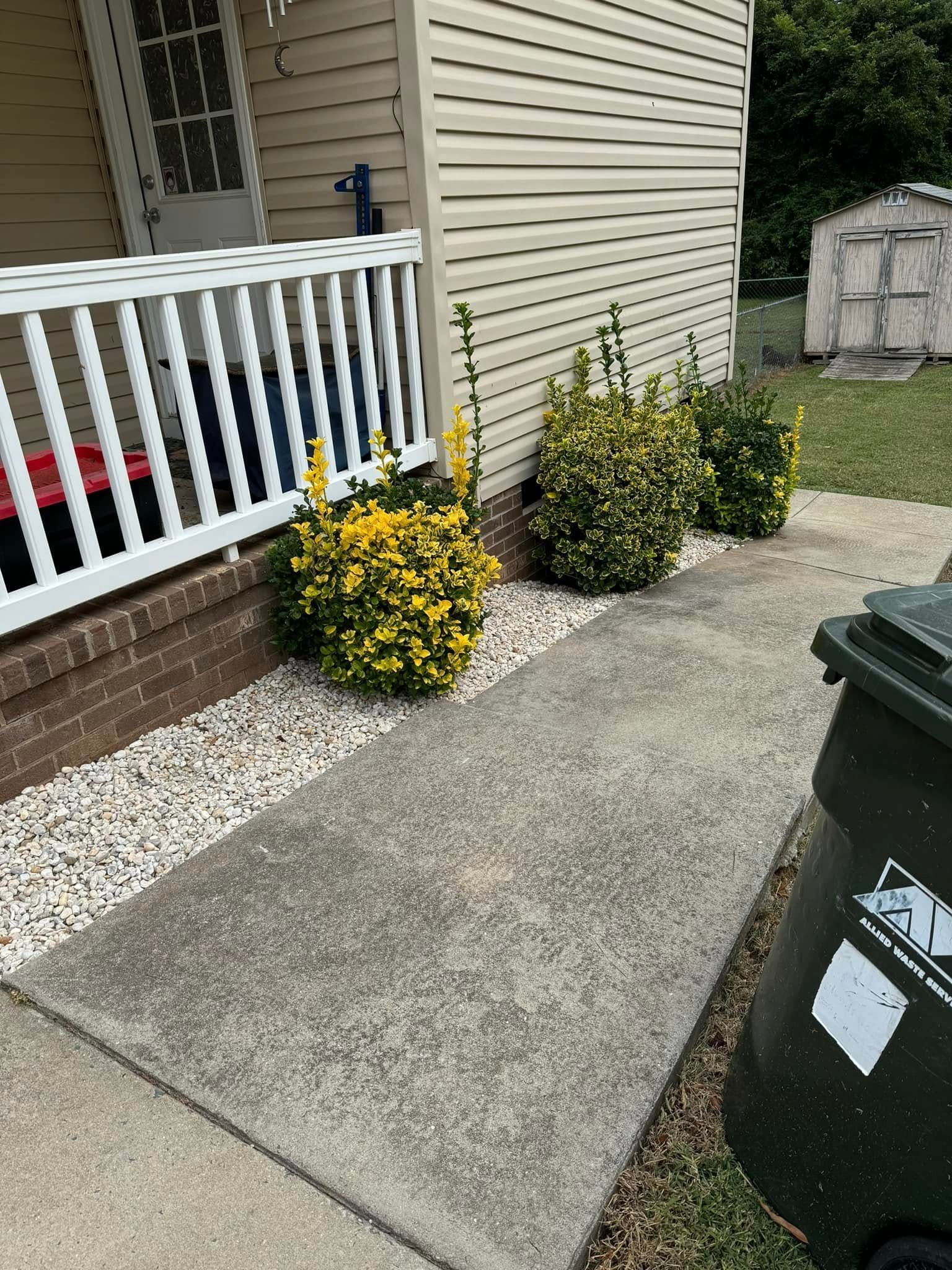
What Changes After Rock Installation Completes
Proper rock installation involves more than spreading stone over landscape fabric—it requires grading to prevent water pooling, edging to stop migration into lawns or planting beds, and depth calculation based on intended use. River rock used as ground cover performs differently than crushed stone used for pathways, and installation around tree root zones must allow gas exchange while suppressing weeds. The choice of rock type and installation depth affects long-term performance more than initial appearance.
After installation, the landscape shows defined borders between rock areas and plantings, consistent stone depth that prevents bare spots or excessive piling, and drainage patterns that move water away from foundations or toward designated infiltration zones. Rock doesn't fade or decompose, so color remains consistent across seasons. Weed pressure drops significantly compared to mulch beds, though occasional maintenance removes volunteer growth that emerges through fabric or from windblown seeds.
Decorative rock complements tree removal, landscape installation, and mulch work as part of coordinated site design. It serves properties where year-round visual consistency matters and where maintenance budgets favor durable materials over annual mulch replacement. Installation quality shows up in edge stability, uniform coverage, and whether rock stays in place during heavy rain rather than washing into adjacent areas.
Common Questions About This Service
Property owners considering rock installation often ask about material selection, site preparation requirements, and how stone integrates with existing landscape features.
What site preparation is required before rock installation?
Preparation includes grading to establish drainage direction, removing existing vegetation or mulch, installing landscape fabric or weed barrier where appropriate, and setting edging to contain rock within defined borders—without these steps, rock migrates and weeds proliferate.
How is rock type selected for specific landscape uses?
Selection depends on whether rock serves as ground cover, pathway material, or decorative accent—river rock in larger sizes suits low-traffic areas, crushed stone compacts for walkable surfaces, and smaller decorative stone integrates with planting beds without overwhelming plant scale.
What depth of rock is needed for effective coverage?
Depth varies by rock type and use, but most decorative applications require two to three inches after compaction to suppress weeds and maintain visual consistency—insufficient depth allows fabric to show through and reduces long-term performance.
How does decorative rock perform in Piedmont clay soil conditions?
Rock allows better water infiltration than compacted mulch, reduces surface erosion during heavy rain common to Jamestown's climate, and doesn't retain excess moisture that promotes fungal issues in plantings—it's particularly effective around trees where organic mulch can harbor pests.
What maintenance does decorative rock require after installation?
Maintenance involves occasional edging to prevent migration, removal of leaf litter and debris that accumulates on the surface, and spot-weeding where seeds germinate in crevices—rock doesn't decompose or require replenishment, so maintenance is less frequent than organic mulch beds.
Bowie's Outdoor Services installs decorative rock and stone features for residential and commercial properties across High Point, Jamestown, and the Piedmont Triad. Schedule a property consultation to review site preparation needs, drainage considerations, and rock selection based on your landscape design and maintenance goals.